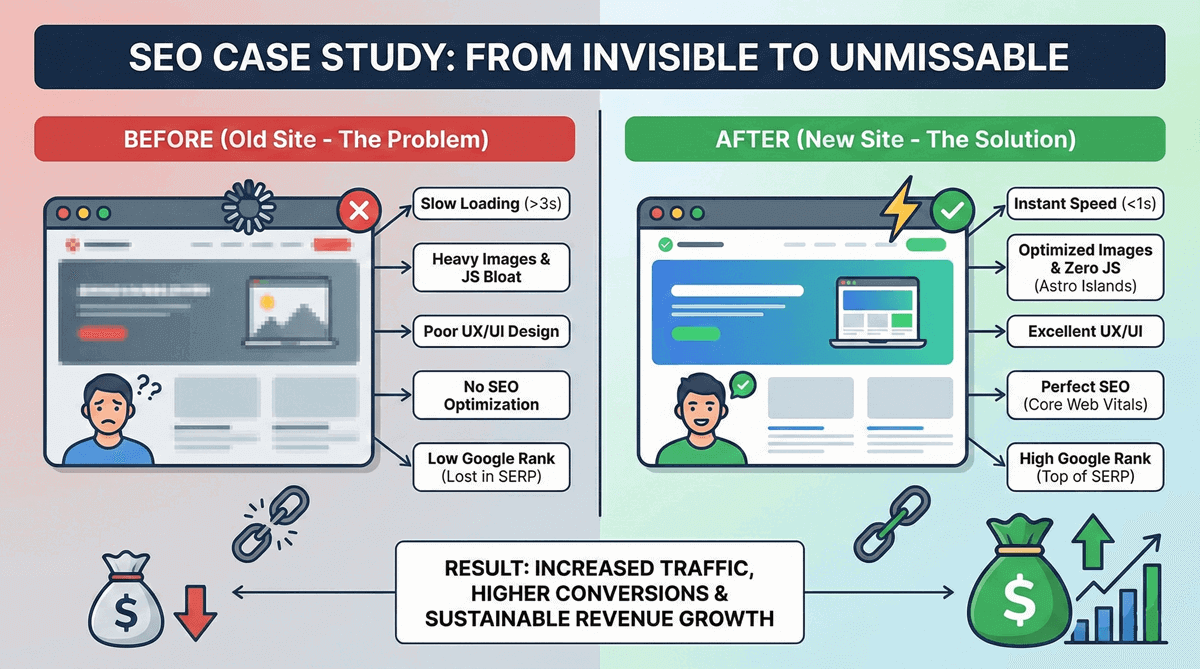
How I Optimized This Site's SEO (Case Study)
Having a fast site is the first step, but making it “understandable” to search engines is the second. For my portfolio, I didn’t just install a plugin (which doesn’t exist in Astro in the “WordPress” sense), but I built a solid technical SEO structure by writing code.
Here are the 3 key implementations I deployed for this site.
1. Dynamic Sitemap and Robots.txt
Instead of writing the sitemap by hand (risking errors), I used the @astrojs/sitemap integration. This script scans my routes (src/pages) at build time and automatically generates the final XML file.
This ensures that every time I publish a new post (like this one), Google knows about it immediately via Google Search Console, without manual intervention.
2. Structured Data (JSON-LD)
To help Google understand that this is a freelance professional’s site, I injected structured data in JSON-LD format into the <head> of every page.
Here is a real snippet of the code generating the Person and ProfessionalService schema:
<script type="application/ld+json">
{
  "@context": "[https://schema.org](https://schema.org)",
  "@type": "Person",
  "name": "Leonardo Castignani",
  "url": "[https://www.leonardocastignani.it](https://www.leonardocastignani.it)",
  "jobTitle": "Web Developer",
  "sameAs": [
    "[https://github.com/leonardocastignani](https://github.com/leonardocastignani)",
    "[https://linkedin.com/in/leonardocastignani](https://linkedin.com/in/leonardocastignani)"
  ]
}
</script>
3. Canonical Meta Tags and Open Graph
Running a multilingual site (IT/EN), avoiding “duplicate content” penalties is crucial. I use a centralized BaseHead.astro component that dynamically manages:
- Canonical URL: Tells Google which is the “original” version of the current page.
- Open Graph Image: The image that appears when you share the link on WhatsApp or LinkedIn. Instead of a generic image for the whole site, each post has its specific cover defined in the Markdown frontmatter.
Technical SEO isn’t black magic: it’s order, semantics, and adherence to web standards.