The Lifecycle of a Digital Project: My Step-by-Step Process
There is a widespread misconception: many clients think a developer’s job consists of sitting in front of a computer, opening an editor, and typing code until the software magically appears online.
In reality, writing code is just one part of the process. A successful digital project-whether it’s custom business management software, a complex web app, or a SaaS platform-is the result of engineering, planning, and rigorous management.
Today, I am taking you behind the scenes to show you the exact lifecycle of a project when you decide to work with me.
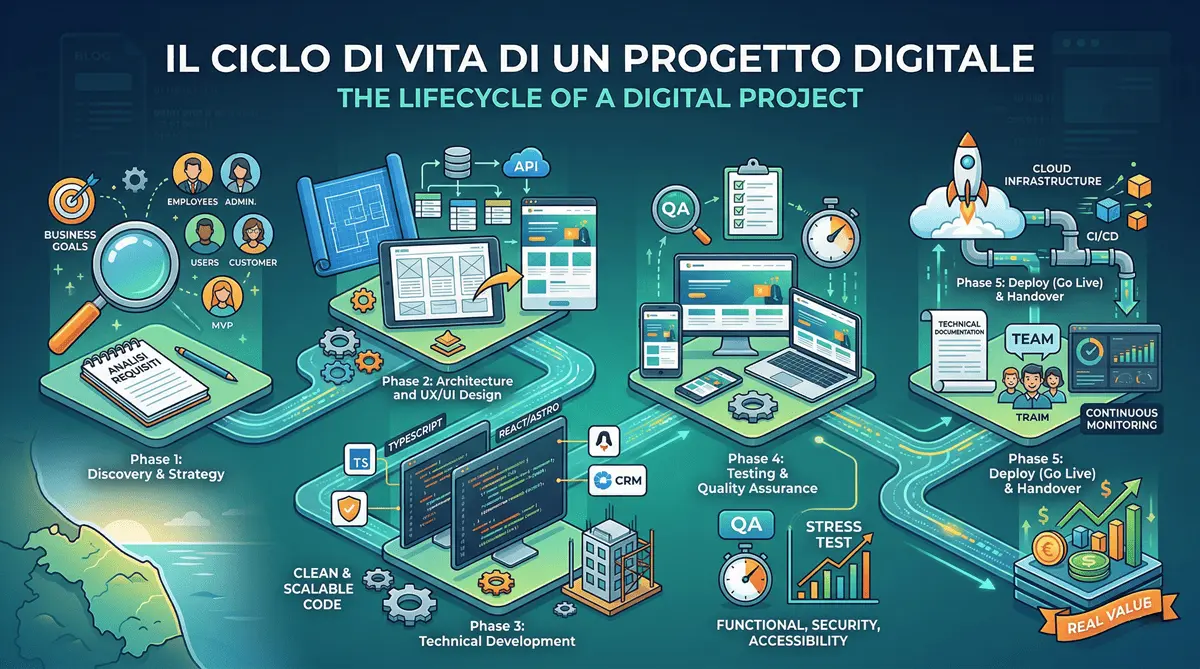
Phase 1: Discovery & Strategy (Requirements Analysis)
I don’t write a single line of code before exactly understanding what business problem we are solving. In this phase, we set up an in-depth call (or grab a coffee, if you’re in the Marche region!) where we analyze:
- What are the bottlenecks in your current workflow?
- Who will use this software (employees, end customers, administrators)?
- What are the “must-have” features for the first release (MVP)? The outcome is a clear project document that aligns technology with your business goals.
Phase 2: Architecture and UX/UI Design
Before building a skyscraper, you need the foundation and the blueprints. The same goes for software.
- Data Architecture: I define how the databases will be structured and how the various APIs will communicate.
- Prototyping (UX/UI): I create Wireframes (structural layouts) to define user flows (e.g., “what happens when the user clicks this button in this dashboard?”). Then I move to high-fidelity mockups so you can approve the exact interface before development begins.
Phase 3: Technical Development (Engineering)
This is where true software engineering comes into play. I turn the approved architecture into real, clean, and scalable code. I use a modern and robust ecosystem (like TypeScript to eliminate logic bugs, and high-performance frameworks like Astro or React). In this phase, I write the business logic, integrate third-party services (like payment gateways or external CRMs), and ensure the backend can handle data securely and efficiently.
Phase 4: Testing & Quality Assurance (QA)
The software is built, but it is not ready for production yet. Now the stress-testing phase begins:
- Functional Testing: I verify that every single piece of logic does exactly what it’s supposed to do (without breaking the rest of the system).
- Security: I check that sensitive data is protected and that authentications work properly. If the project collects user data, this phase also covers GDPR compliance: I wrote a guide to cookie banners and GDPR that explains how to handle this correctly.
- Responsiveness and Accessibility: I make sure the interface is smooth and usable on any device.
Phase 5: Deploy (Go Live) & Handover
The big day. I configure the cloud infrastructure, set up automated release pipelines (CI/CD), and we push the project to production. But I don’t leave you alone: I provide technical documentation, practical training to teach your team how to use the new platform, and we establish a plan for continuous monitoring.
Conclusion
Entrusting the development of a digital project doesn’t mean buying “programming hours,” but being guided through a proven process that turns an abstract idea into a solid business tool. This methodical approach is what guarantees deadlines are met and delivers a final product that doesn’t just “work,” but brings real value to your company.
If you’re wondering how much it costs to go through this entire process, I covered the topic in detail in this article on how much a professional website really costs.
Frequently Asked Questions
What are the standard phases of custom web development?
The process includes 5 key steps: Discovery & Strategy, UX/UI Architecture, Technical Engineering, Quality Assurance (QA) Testing, and Deployment.
Why is the Discovery phase crucial for custom software?
The Discovery phase aligns technology with business goals, clearly defining the Minimum Viable Product (MVP) requirements before writing any code.
Do you provide post-deployment support and training?
Yes, every digital project handover includes technical documentation, team training, and automated CI/CD pipeline setup for ongoing maintenance.
Have a similar project in mind?
If this article gave you useful ideas, I can help you put them into practice on your site or project.
Get a Free Quote