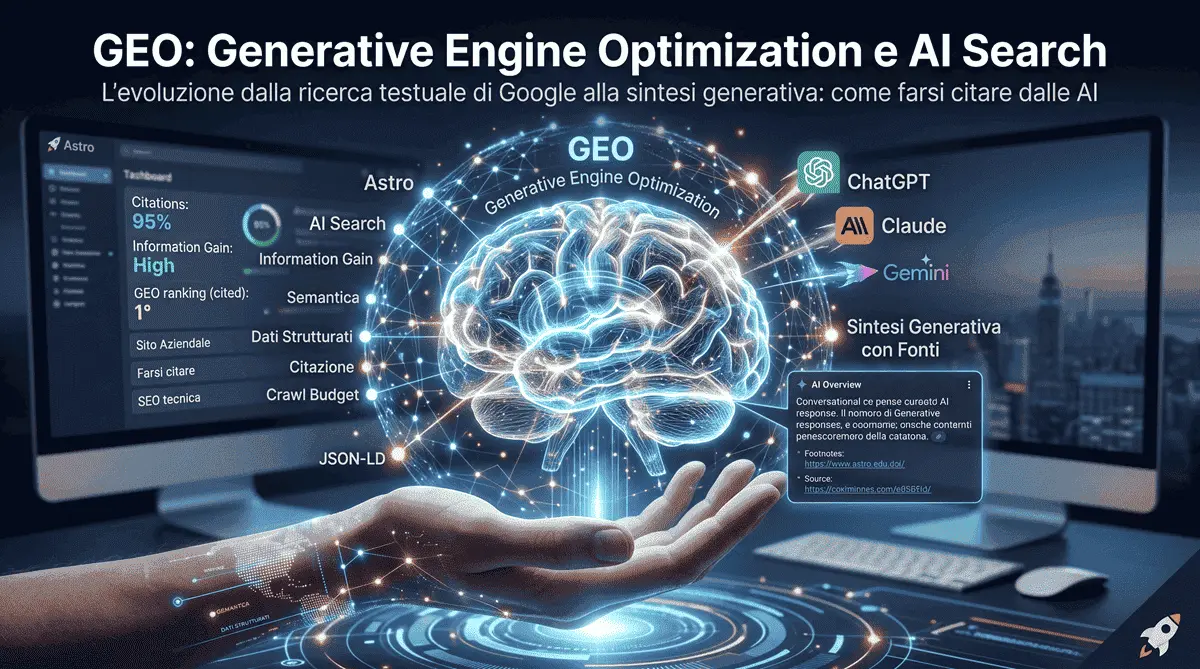
GEO: What it Means to Be 'Cited' by ChatGPT, Claude, and Gemini
For over twenty years, the goal of every corporate website has been singular: to appear among the ten blue links on Google’s first page. We optimized keywords, built backlinks, and hoped the user would decide to click on our exact title.
Today, that paradigm is crumbling. People no longer simply “search” by scrolling through lists of links. They ask ChatGPT, Claude, Gemini, or Google’s AI Overviews directly to solve a complex problem for them. The Artificial Intelligence analyzes the web, synthesizes a conversational answer, and, in the best-case scenario, inserts a small footnote linking to the source.
This epochal transition has birthed a new discipline: GEO (Generative Engine Optimization). It is no longer about ranking in an index, but about convincing a language model to use your content as the foundation for its answers.
The Difference Between SEO and GEO
Old search algorithms rewarded popularity (inbound links) and exact keyword matching. A Large Language Model (LLM), on the other hand, evaluates text based on its semantics, logical structure, and unique informational value.
If your blog post says exactly the same things found on Wikipedia or a hundred other competing sites, the AI will have no reason to cite you. It will take the general concept and rewrite it without indicating a specific source. To be cited, you must offer something the AI cannot deduce elsewhere.
1. Information Gain (The Value of Experience)
The generative algorithm is hungry for Information Gain. It wants firsthand data, expert opinions, and real-world statistics.
Instead of writing “How to maintain a boiler,” write “How I fixed 50 boiler breakdowns in Civitanova Marche last year: data and procedures.” Share tables with your real prices, publish the results of physical tests you conducted in your company, or express a strong contrarian opinion backed by your work experience. Direct experience and non-replicable data are your only defenses against automated synthesis and are the main triggers that force the AI to cite you as a primary source.
2. Flawless Semantic Structure
An AI reads your site by extracting pure text. If your site is a chaotic tangle of <div> tags without a logical hierarchy, the AI will struggle to understand its context.
Building a site with modern, fast frameworks like Astro becomes a massive competitive advantage for GEO:
- Clean Markdown: content written in Markdown gets rendered into semantic HTML - this very article, for instance, is wrapped in a real
<article>tag, not a generic<div>, specifically to give the AI a clear hierarchy to follow. - JSON-LD and Schema Markup: providing structured data is equivalent to handing the AI a pre-digested database. On this site, every blog post really does expose
BlogPostingandBreadcrumbList, and when a post has an FAQ section (like this one),FAQPagetoo - generated automatically from thefaqsfield I write in the frontmatter. I cover this in detail in my guide to JSON-LD structured data in Astro and in the technical SEO case study on structured data.
3. Quotability and Formatting
AIs love order. When formulating an answer, they tend to prefer sources that present information in dense, easily comparable formats.
Avoid huge walls of text. Organize key concepts into Markdown Tables, bulleted lists, or clear, concise Question and Answer (Q&A) sections. If you write a long essay on web architecture, always include a summary block at the beginning with the 3 Key Takeaways. The easier your content is to scan and extract, the more likely an LLM is to use it verbatim, appending a link to your company.
How I Put This Into Practice on This Site
Beyond the theory, here are three concrete choices I made to make this site citable by AIs, not just indexable by Google:
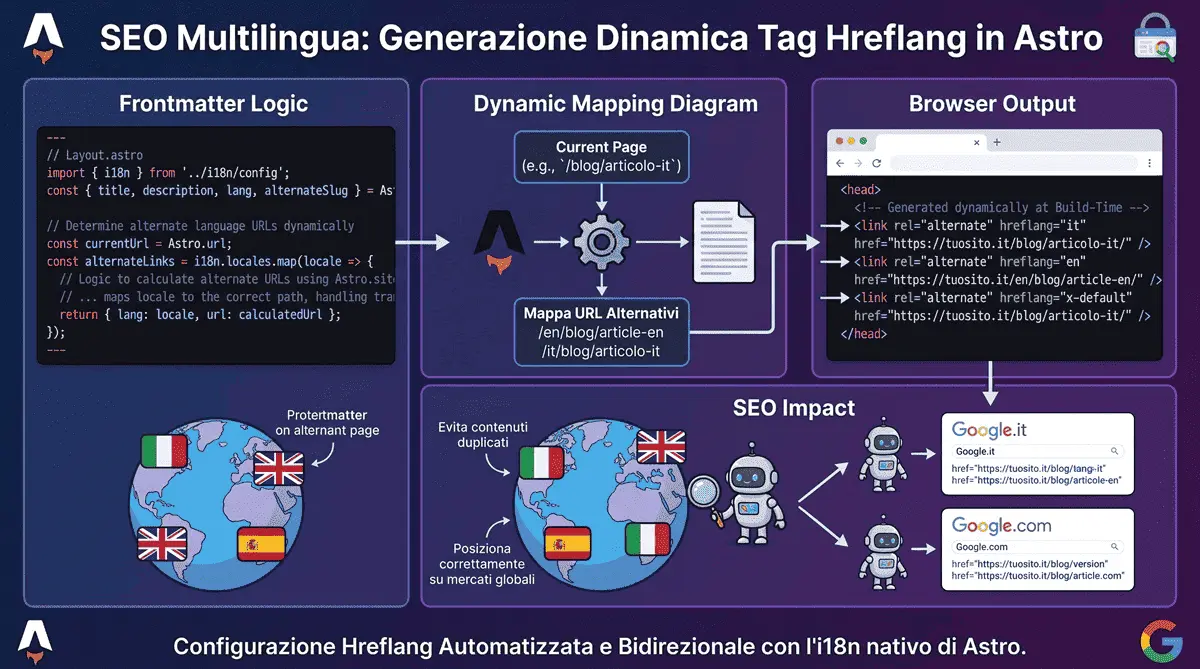
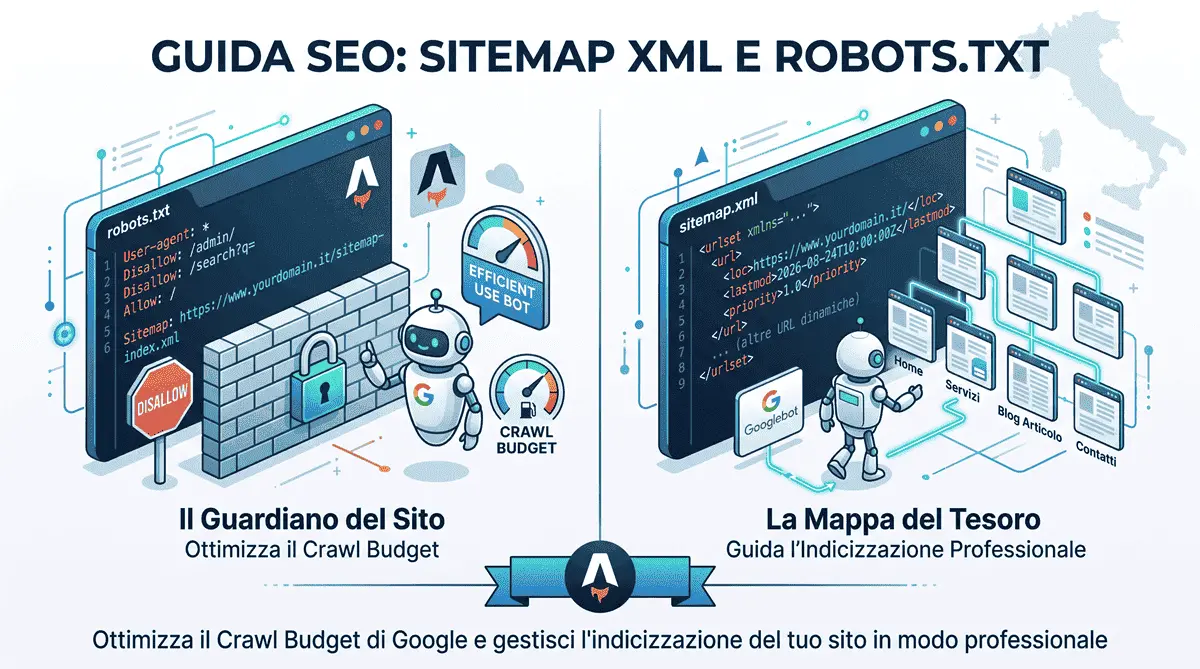
robots.txtdoesn’t block AI crawlers. The directive is simplyUser-agent: *followed byAllow: /: I don’t exclude GPTBot, ClaudeBot, or other LLM crawlers, because the goal is to be read, not to hide. I cover this in my guide to XML sitemaps and robots.txt.- Every translation is correctly linked. An AI that finds the Italian version of an article needs to be able to trace back to the English one (and vice versa) with no ambiguity: that’s the work I describe in my guide to hreflang and multilingual SEO, and it’s GEO too - a source that’s citable in two languages is worth more than a single-language one.
- A dedicated JSON endpoint for AI agents. Beyond the HTML pages, this site exposes
/llms-full.json: a file generated at build time with my professional profile data, the services I offer, and the entire article archive (title, description, tags, FAQs), served with public caching and open CORS. It isn’t meant for a human visitor, but for an AI agent that needs to pull in, in a single request, everything it needs to know about who I am and what I write, without having to parse the HTML of dozens of pages.
Preparing a digital ecosystem for GEO does not mean throwing away the old rules of SEO, but evolving them. Today, a brand’s authority is not just measured by inbound traffic, but by how much the world’s artificial intelligences consider your company an authoritative and indisputable benchmark in your industry.
Frequently Asked Questions
What is the main difference between traditional SEO and GEO?
Traditional SEO focuses on ranking blue links on search engines using keywords and backlinks. GEO (Generative Engine Optimization) aims to get your content directly cited in conversational answers by AIs like ChatGPT and Gemini, rewarding deep semantics, Information Gain, and clean formatting.
What is Information Gain and why do AI models need it?
Information Gain is the unique, original value a piece of content adds beyond what is already widely known on the web. Firsthand data, direct experience, and real statistics force the AI to cite you as a primary source because it cannot synthesize that specific knowledge from generic sources.
How do you build websites optimized for Generative AI search?
Operating from Civitanova Marche, Italy, I structure every site with real JSON-LD structured data (FAQPage, BlogPosting, ProfessionalService), a robots.txt that doesn't block AI crawlers, and, when it's warranted, a dedicated JSON endpoint acting as a knowledge base for agents - exactly the infrastructure running on this very site.

Have a similar project in mind?
If this article gave you useful ideas, I can help you put them into practice on your site or project.
Get a Free Quote